

Inorganic:
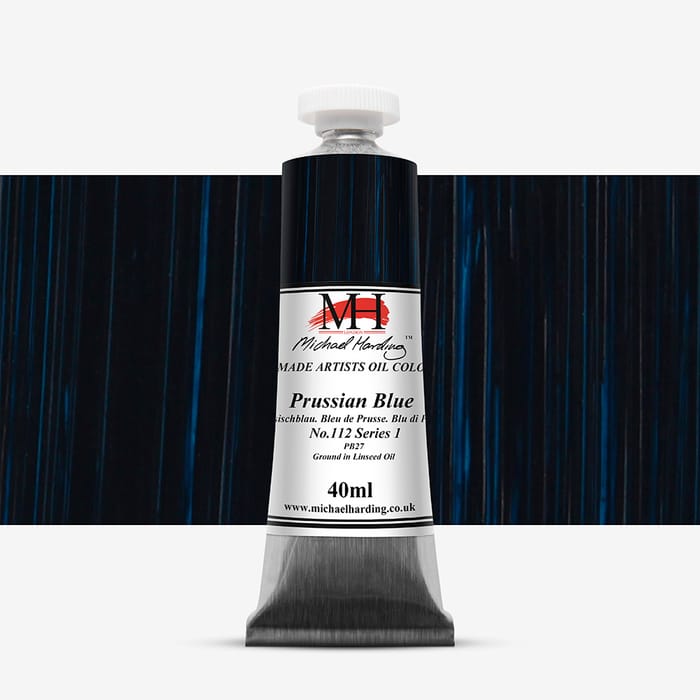
Prussian Blue was created in Berlin in 1704, and its popularity spread through the early 18th century. Prussian Blue is one of the first synthetic inorganic pigments and one of the most controversial as well. The earlier and less purified versions had mixed reputations; they were said to fade in hues and migrate or leech through succeeding paint layers. But modern standards of washing have corrected the tendency to fade, and migratory problems are no longer reported. I suspect that this was the result of poor stabilizing. At any rate, Prussian Blue, like Alizarin, is one of those colours some painters find essential. It has a deep, inky beauty. On its own and in more concentrated mixes, it exhibits a slight bronzy sheen that can be used as a complementary glaze.
| Drying | Very Fast |
| Transparency | Transparent |
| Lightfastness | Very Good |
| Oil Content | High |
| Tint Power | Very High |
| Toxicity | Non-Toxic |
Only logged in customers who have purchased this product may leave a review.
Related products
Reviews
There are no reviews yet.